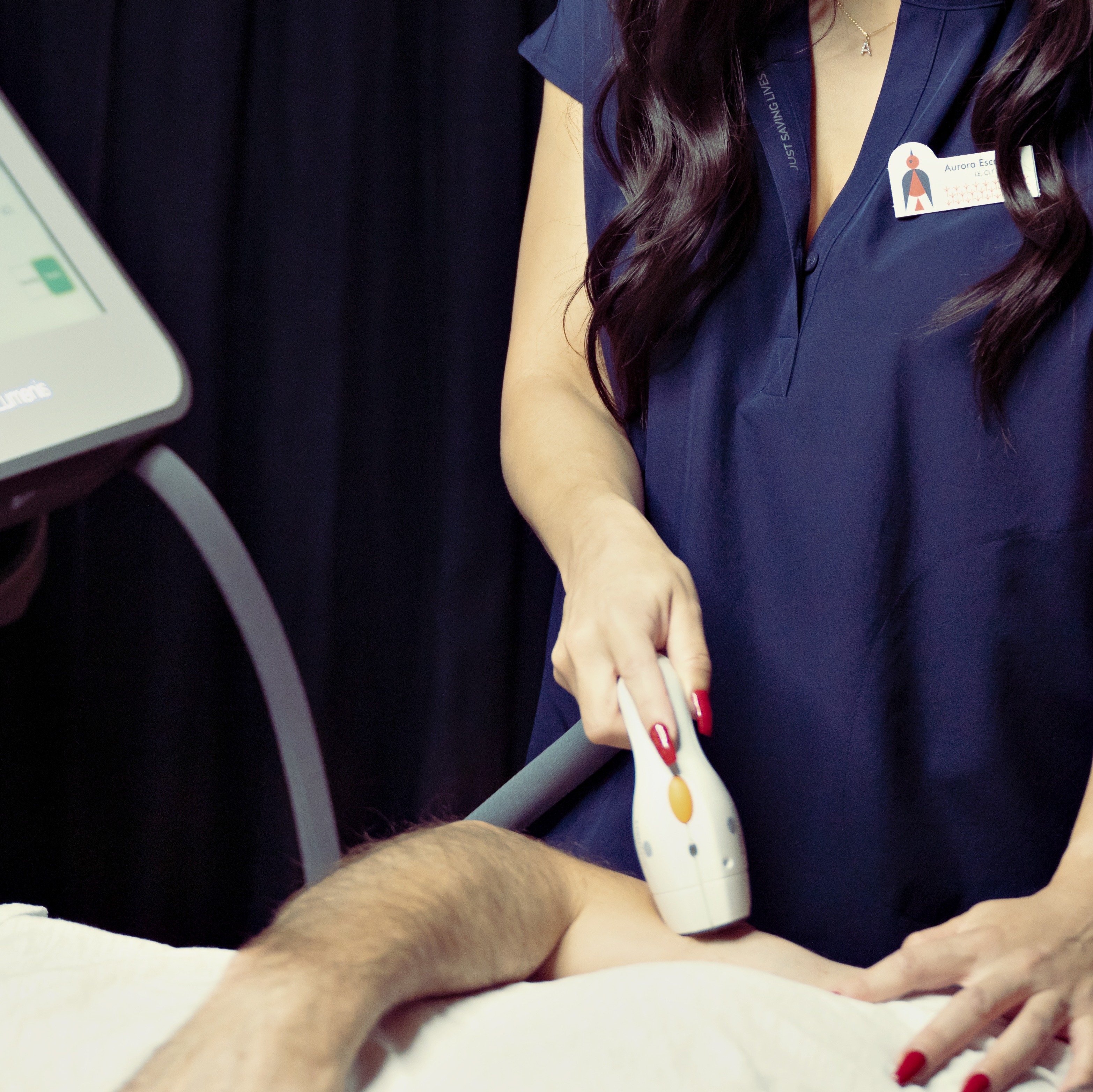
That tattoo made sense once. Or at least it seemed like a good idea at the time. If the ink feels dated, distracting, too visible, or tied to a version of you that no longer fits, Flycatcher offers laser tattoo reduction and removal treatments for men who want a fresh start.
Whether it’s an old name, a faded design, a symbol that no longer means much, or artwork that no longer fits your life, you are not the first man to outgrow his ink.
Tattoo reduction and removal is a gradual process that can be tailored to your goal — whether that is fading the tattoo significantly, lightening it, or trying to remove as much of it as possible.
Fortunately there is Flycatcher. We’ve created a comfortable environment and experience that will put any man at ease. We offer tattoo reduction and removal for men who are ready to make unwanted ink less visible, whether that means fading an old tattoo, softening a design that no longer fits, or simply taking the first step toward cleaner skin.
Some tattoos respond more easily than others. Results can vary based on the tattoo’s size, age, color, depth, type of ink, and location on the body.
Black and dark blue inks are often easier to treat, while colors like green, red, yellow, white, and flesh tones can be more stubborn.
Complete removal is not always possible, which is why reduction is often just as important a goal as removal.
Treatments can be purchased individually or as an "unlimited" series at a discounted rate. Pricing is based on size of treatment area in square inches.
Extra small < 1"
Individual: $150 Unlimited: $1,500
Small 1 to 4 square inches
Individual: $225 Unlimited: $2,250
Medium 4 to 9 square inches
Individual: $300 Unlimited: $3,000
Large 9 to 16 square inches
Individual: $375 Unlimited: $3,750
Extra large 16 to 25 square inches
Individual: $425 Unlimited: $4,250
Extra extra large 25 to 88 square inches
Individual: $500 Unlimited: $5,000
For Flycatcher, unlimited means unlimited treatments within a three-year window.
We recommend spacing sessions eight weeks apart, with six weeks being the absolute minimum, so your skin has time to heal and your body has time to clear the ink between treatments.
That means some clients may get the result they want in around 10 treatments, while others may want 12, 14, or more depending on the tattoo and their goals.
A lot of places cap “unlimited” at two years. We give you three, which gives you more flexibility, more time, and a more realistic path to the result you’re actually after.
There is no honest one-size-fits-all answer. Most tattoos need a series of treatments, and the total depends on things like the size of the tattoo, the colors used, how deeply the ink was placed, where it is on the body, and how your skin responds.
Our "Unlimited" pricing is based on needing a minimum of 10 sessions.
Yes. It hurts. Not in a dramatic movie-scene way, but definitely in a “why did I do this to myself in 2014?” way.
Most people say it feels like hot grease hitting the skin, or a rubber band if the rubber band were angry and on fire.
The good news is that treatments are usually pretty quick, and there are ways to make it more tolerable (i.e.- topical numbing cream). Still, nobody should sell this as painless — it is a real discomfort tradeoff for getting rid of something you no longer want.
Most appointments are fairly quick, especially for smaller tattoos, but the exact time depends on the size and location of the piece. A reduction treatment is much faster than the process of actually getting a tattoo.
Sessions are scheduled 8 weeks apart (6 weeks minimum) because your skin needs time to recover and your body needs time to clear the fragmented ink between treatments.

