

Blackheads that never seem to clear. A forehead that stays oily by lunchtime. Breakouts that keep returning, even though you wash your face and have tried a shelf's worth of acne products. At some point, a professional chemical peel starts to sound appealing.
But is it actually the right treatment?
Chemical peels can help some types of acne, particularly blackheads, whiteheads, and clogged pores. They may also help selected cases of mild inflammatory acne. They are much less suitable as a stand-alone answer for deep, painful nodules or cysts, severe acne, or bumps that aren't acne in the first place. And they don't replace a consistent acne-treatment plan. [1]
That applies whether you're a man still getting breakouts in your 40s or a parent looking into treatments for a teenage son. Before choosing a peel, the useful question is what kind of problem you're trying to solve.
Which Types of Acne May Benefit from a Chemical Peel?
Not all breakouts respond the same way. Here's how to think about the fit—not a way to diagnose your skin from a checklist.
| What you're noticing | Where a peel may fit |
|---|---|
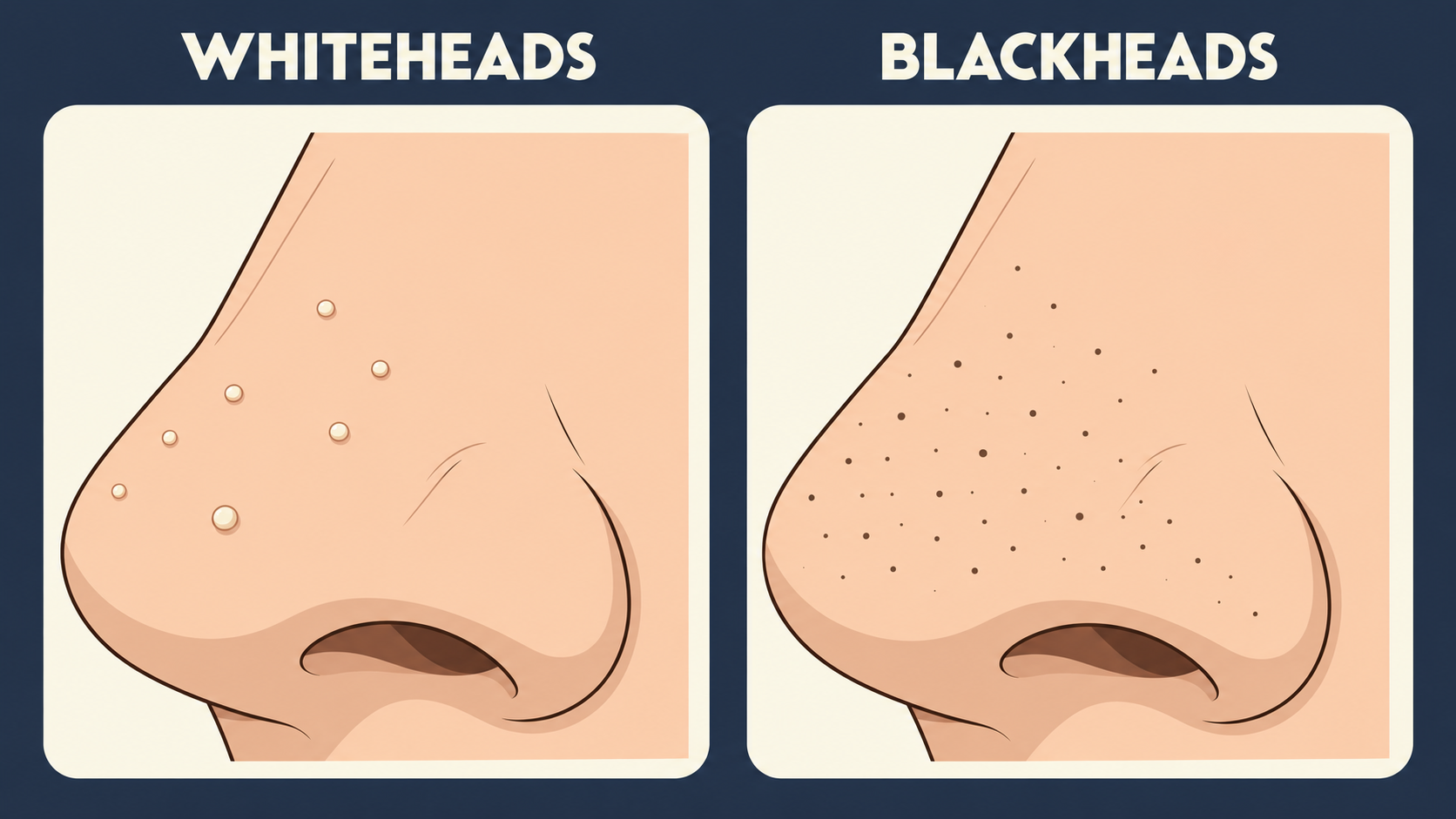
| Blackheads and whiteheads | Often a reasonable option: these clogged follicles (comedones) are a logical target for exfoliating acids. |
| Oily, congested skin | May help loosen built-up cells and improve congestion, but won't permanently change your genetics or oil-gland activity. |
| A few inflamed pimples | May be an adjunct to appropriate acne care; the evidence is less definitive than for established acne medications. |
| Flat dark marks after pimples | Certain peels may improve superficial discoloration, but irritation can also make pigment changes worse. |
| Deep, painful lumps or widespread inflammation | Not a peel-first problem. Prompt medical evaluation may be needed to control acne and limit scarring. |
| Bumps after shaving, or clustered bumps around hairs | First determine whether it's acne, folliculitis, razor bumps, or a combination. The treatment approach may differ. |
A 2018 systematic review of randomized trials found that chemical peels may improve acne, but the available studies were small and varied considerably. The review could not establish that one type of peel was reliably superior. The American Academy of Dermatology's 2024 acne guideline found insufficient evidence to recommend for or against chemical peels as an acne procedure. In plain English: peels can be useful, but they're not a proven replacement for standard acne treatment. [2] [3]
Additional Reading: Adult Acne in Men: Why You're Still Breaking Out in Your 30s and 40s
What Is a Chemical Peel Actually Doing to Acne-Prone Skin?
Acne begins, in part, when dead skin cells and sebum—the oil your skin naturally produces—accumulate inside hair follicles. A professional chemical peel applies a carefully selected acidic solution to create controlled exfoliation. Depending on the formulation, it can help shed built-up surface cells and reduce some of the congestion that contributes to blackheads and whiteheads.
Different acids have different properties:
- Salicylic acid is oil-soluble and is commonly used for clogged pores and comedonal acne. It's a beta hydroxy acid (BHA).
- Glycolic acid is an alpha hydroxy acid (AHA) that exfoliates surface skin cells; it has also been studied in professional acne peels.
- Lactic and mandelic acids are other AHAs used in some peeling formulas. Their suitability depends on concentration, skin tone, formulation, and individual tolerance.
Acid name alone doesn't tell you how aggressive a peel will be. Concentration, pH, time on the skin, preparation, layering, and the provider's technique all matter. Professional peels should not be confused with the much milder exfoliating products you might use at home. For the basics of at-home exfoliation, see The Benefits of Exfoliation for Men's Skin.
And a peel does not “detox” skin, permanently shrink pores, or switch off the hormonal and inflammatory processes involved in acne.
When a Peel Is Most Likely to Make Sense
Blackheads, Whiteheads, and Stubborn Congestion
Blackheads and whiteheads are called comedones. They form when follicles become plugged with cells and oil. Since superficial peels target some of that buildup, they're a plausible option for men whose main complaint is clogged pores rather than deep inflammation.
That doesn't mean a single peel clears every pore or prevents new plugs from forming. Maintenance skincare and, when appropriate, evidence-based acne treatments remain important. For men whose concern is mainly oiliness and visible pores, see Flycatcher's enlarged pores and oily skin page.
Mild Inflammatory Breakouts
Some small clinical studies have reported improvements in mild-to-moderate inflammatory acne after a series of superficial peels. But the results vary, and peels are generally better considered one possible addition to a plan—not the main solution when acne is persistent or inflamed. [2]
Flat Marks Left Behind After Acne
After a pimple heals, it may leave a flat brown, gray, red, or pink mark. Brown or gray patches may represent post-inflammatory hyperpigmentation, while persistent redness is a different process. Selected superficial peels may improve certain forms of discoloration, but treatment choice matters: excessive irritation can create more pigmentation, especially in darker skin tones. For the broader discussion, see Treating Hyperpigmentation in Men.
When a Chemical Peel Isn't the Right First Move
Deep, painful nodules or cysts, severe inflammation, or acne that's rapidly worsening deserve medical assessment—not simply a stronger peel. These patterns can scar, and effective treatment may require prescription medications. Current dermatology guidelines support treatments such as topical retinoids and benzoyl peroxide, with other prescription options and isotretinoin in appropriate cases. [1]
A peel also won't correct every reason acne keeps recurring. For example, if breakouts coincide with a medication change, testosterone therapy, certain skincare products, or repeated friction, exfoliating the skin doesn't necessarily address the continuing trigger. That's the territory of our adult acne guide, which explains the possible drivers without assuming every breakout has a single cause.
Active skin infection, open or injured skin, significant irritation, and certain skin conditions or medications may mean postponing treatment or choosing another approach. Always disclose topical prescriptions, oral medications, recent procedures, unusual scarring history, cold sores, and changes in skin condition during the consultation.
Acne, Folliculitis, or Razor Bumps? The Beard-Area Problem
Men have an extra complication: plenty of bumps show up in areas that also get shaved. A spot on your neck might be acne. It might be an inflamed hair follicle, an ingrown hair, or pseudofolliculitis barbae (razor bumps). You can even have more than one problem at once.
Why does that matter? Because a treatment aimed at clearing clogged pores isn't automatically the right treatment for a hair that has curved back into the skin or an infection of the follicle. The distinction matters even more when you're considering acids around skin already irritated by shaving.
Providers should also account for beard coverage and any freshly shaved, nicked, or irritated areas before applying a peel. Around treatment, you'll need to follow individualized shaving, exfoliant, and aftercare instructions rather than returning immediately to an aggressive grooming routine.
Can Chemical Peels Help Teenage Boys with Acne?
They can be an option for some teenagers, particularly when blackheads, whiteheads, and congestion are prominent. But adolescence is also a time when acne can become inflammatory and, for some boys, cause lasting scars. Parents should not assume that a professional peel is automatically gentler or more appropriate than evidence-based medical acne treatment.
A good treatment plan considers the teen's acne pattern and severity, skin sensitivity, existing medications, ability to follow aftercare, and whether a dermatologist should be involved. Peels may sometimes complement a regimen, but painful deep lesions, scarring, or substantial ongoing inflammation warrant medical evaluation. [3]
At Flycatcher, we offer a teen version of our Signature Acne Peel. The protocol is adjusted for age and individual skin needs—not simply performed at maximum strength because a teenager has active breakouts.

What a Chemical Peel Can—and Cannot—Do for Acne
It may: improve surface congestion, help some blackheads and whiteheads, contribute to improvement in selected mild breakouts, and improve certain superficial post-acne marks.
It cannot: guarantee clear skin, prevent every new breakout, eliminate the underlying tendency toward acne, replace needed prescription care, permanently change pore size, or reliably fix established indented or raised acne scars.
The right expectation is gradual improvement in a specific problem—not a clean slate after one appointment. If what you actually want is cleansing and occasional extractions rather than acid resurfacing, a men's facial may be a more appropriate conversation.
Does a Stronger Peel Work Better?
No. Peel depth isn't a scorecard.
- Superficial (light) peels affect the outermost skin layers and are the type most commonly considered for acne-related congestion. Redness, tightness, and flaking can still occur.
- Medium-depth peels reach deeper layers, increase recovery time and pigment risk, and are generally not necessary simply because someone has blackheads or ordinary active acne.
- Deep peels require substantial recovery and specialist-level care and are not routine acne treatments.
The AAD emphasizes that recovery, complications, and who should perform a peel depend on its depth. People with deeper skin tones require particular attention to peel selection and technique because unwanted pigmentation can follow inflammation or injury. [4]
How Often Would You Need a Chemical Peel?
Some people undergo a series of superficial peels, but there's no universal schedule for acne. The AAD notes that lighter peels may be repeated, while the safe interval depends on the treatment and clinical assessment. For some superficial peels, spacing of roughly two to five weeks is used; acne studies have also tested shorter protocols. Those aren't instructions to repeat any particular formula on a fixed schedule. [4]
Skin response comes first. If you're still red, irritated, peeling, or managing an acne flare, the next step may be to wait, change the plan, or reconsider whether peels belong in it at all. Home care between appointments often matters more than squeezing in another session.
What About Downtime, Irritation, and Skin Tone?
A chemical peel creates an intentional injury to the skin. That is why even a superficial treatment deserves respect.
Possible reactions include stinging, redness, tightness, dryness, scaling and flaking. More serious but less common complications include burns, infection, persistent redness, pigment changes and scarring. Darker skin tones can be particularly vulnerable to post-inflammatory hyperpigmentation if the peel is inappropriate or overly aggressive. [4]
Expect practical aftercare: use the recommended gentle cleanser and moisturizer, protect healing skin from sunlight, and don't pick or pull at peeling skin. Your provider should tell you when to restart shaving, workouts, retinoids, exfoliating products, and other potentially irritating routines. If skin becomes unusually painful, increasingly swollen, blistered, or appears infected, contact a healthcare professional promptly.
And be wary of “no downtime” guarantees. Some superficial peels cause relatively little interruption; others leave visible redness or peeling. Recovery isn't identical for everyone.
What If the Problem Is Acne Scarring?
First separate a flat leftover mark from a true scar. A depressed pit or raised scar involves structural change to the skin—not just pigment sitting at the surface. Although peels may sometimes improve discoloration and very superficial texture, established scars often require a different strategy.
Flycatcher's dedicated guide compares microneedling with SkinPen, RF microneedling with Morpheus8, lasers, and other scar-specific considerations without confusing them with active-acne treatment.
Additional Reading: Best Treatments for Acne Scars in Men: SkinPen, Morpheus8 & Lasers
How Flycatcher Approaches Chemical Peels for Acne
Flycatcher's Signature Acne Peel uses the NOON Aesthetics protocol described on our live site, which includes a 50% glycolic acid peel and an optional 14–20% salicylic acid peel, alongside cleansing, extractions when appropriate, an acne-focused serum, a mask, and post-treatment skincare. Those are published formulation details—not a promise that every client receives every step or that a higher percentage is appropriate for every breakout.
Concentration alone doesn't establish peel depth, safety, or suitability. Before treatment, the provider should evaluate the acne pattern, skin tone, sensitivity, products and prescriptions, and what you've already tried. We also provide a teen acne-peel option with an adjusted protocol.
For pricing, package options, and what’s included, see our guide to chemical peel costs in Austin.
Sometimes the conclusion will be that a peel fits the goal. Sometimes a simpler at-home plan, a facial, or evaluation by a dermatologist makes more sense. The point is to choose the treatment for the problem, not the other way around.
The Right Treatment Starts with the Right Question
Chemical peels can be a useful tool for certain types of acne, especially when clogged pores and superficial congestion are prominent. They are not a one-size-fits-all acne treatment—and they're not a shortcut around treating severe inflammation or figuring out whether those bumps are acne in the first place.
If you're unsure what you're dealing with—or you're researching options for a teenage son—Flycatcher can help evaluate the skin and discuss whether a Signature Acne Peel fits the situation or whether another professional should be involved. Learn about Flycatcher's acne treatment options or call/text (737) 239-0112 to arrange a consultation.
References
- American Academy of Dermatology Association. Updated guidelines for the management of acne (2024).
- Chen X, et al. Chemical peels for acne vulgaris: a systematic review of randomised controlled trials. BMJ Open. 2018;8:e019607.
- Reynolds RV, et al. Guidelines of care for the management of acne vulgaris. Journal of the American Academy of Dermatology. 2024;90(5).
- American Academy of Dermatology Association. Chemical peels: Frequently asked questions.
