

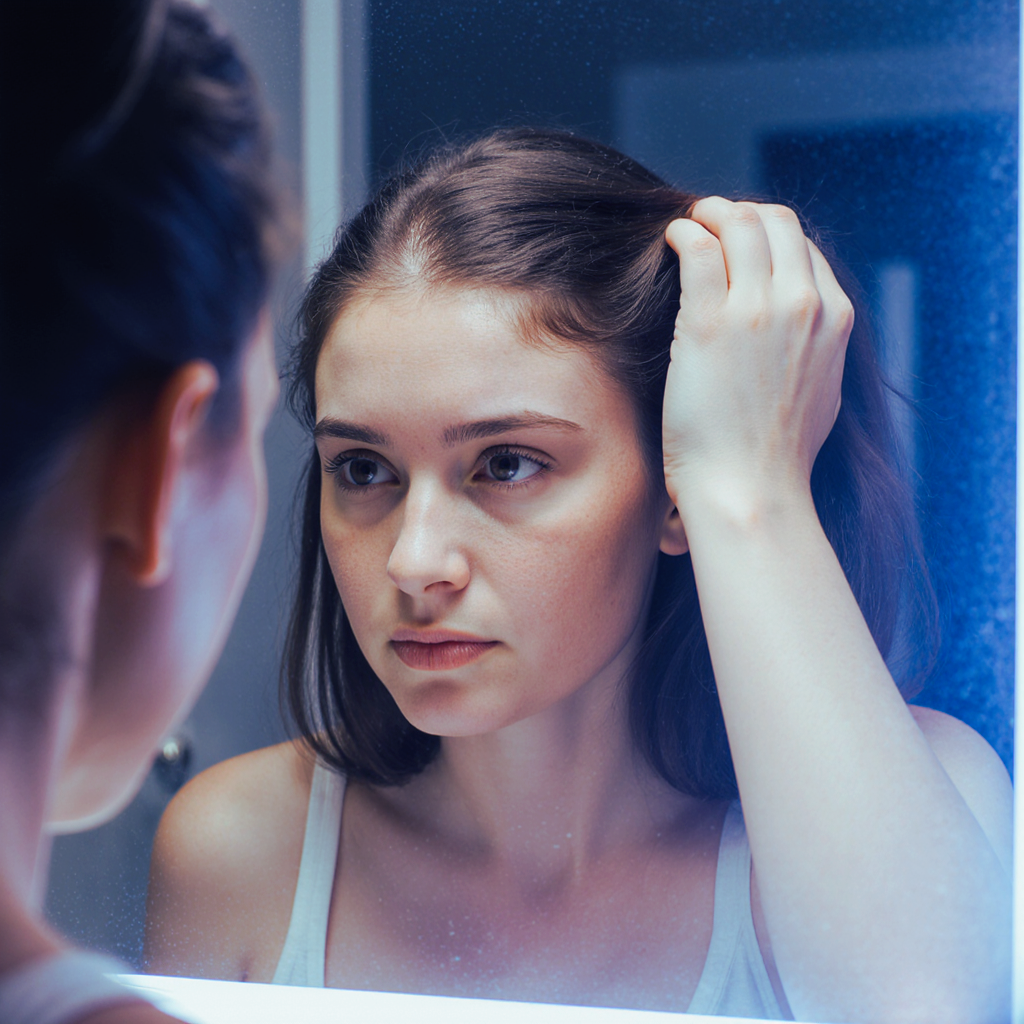
It’s one of the lesser-discussed side effects of becoming a new mom: the sudden, dramatic shedding of hair a few months after giving birth. Postpartum hair loss is common and, for most women, temporary—but that doesn’t make it any less distressing. The good news? You’re not alone, it’s usually not permanent, and there are effective, natural ways to manage it.
In Austin, mothers can turn to Flycatcher for trusted, evidence-based solutions. As a local provider of the GetHairMD™ program, we offer comprehensive care to help you restore your hair and your confidence.
What Is Postpartum Hair Loss?
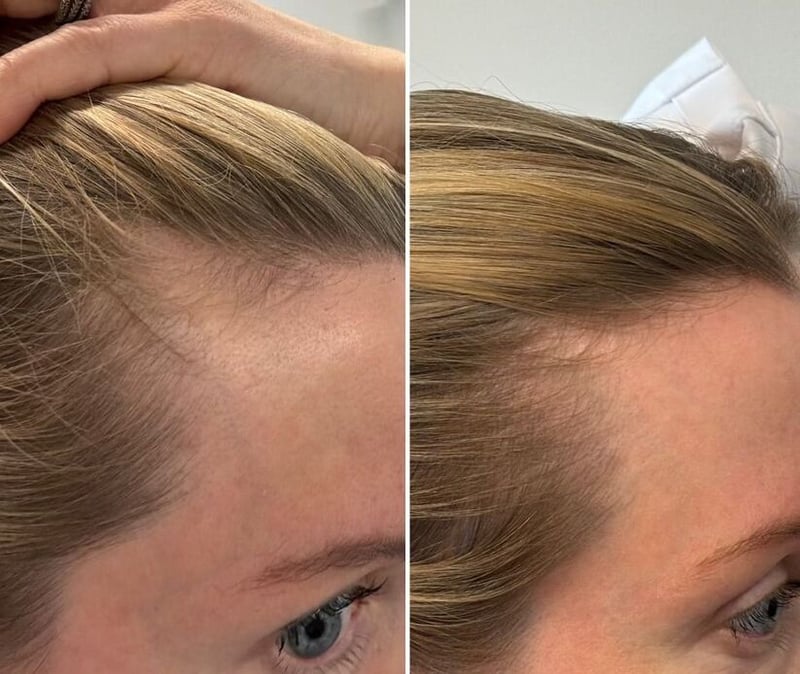 This image shows an example of postpartum hair loss and the results from two PRP hair treatments (Sarah-Kate Rems, NP | NYC Cosmetic Dermatology)
Postpartum hair loss is a form of telogen effluvium—a temporary condition in which more hairs than usual enter the resting (telogen) phase of the hair cycle and shed. This typically occurs about 2 to 4 months after childbirth.
Why? During pregnancy, elevated estrogen levels keep hair in the growth (anagen) phase longer than usual, which often results in thicker, fuller hair. But after delivery, hormone levels plummet, triggering a synchronized shift of hair follicles into the shedding phase. This can lead to noticeable thinning, particularly around the temples, hairline, or crown.
Rest assured, this is a normal physiological response and affects the majority of postpartum women.
Why Does Hair Fall Out After Pregnancy?
Hormonal changes are the primary trigger. As estrogen drops rapidly post-delivery, it disrupts the normal hair growth cycle. The three key phases include:
-
Anagen (growth)
-
Catagen (transition)
-
Telogen (resting/shedding)
Additional contributing factors include:
-
Stress (emotional and physical)
-
Sleep deprivation
-
Nutritional deficiencies (iron, zinc, B vitamins)
-
Thyroid dysfunction (especially postpartum thyroiditis)
Some women may experience more pronounced shedding due to genetic predisposition or compounding health issues.

When Does Postpartum Hair Loss Start and How Long Does It Last?
For most women, shedding begins 2 to 4 months after giving birth. It typically peaks around 4 months postpartum and starts to improve by 6 months. That said, for some women, shedding can persist for up to a year.
The good news? Regrowth often starts to become noticeable within 6 months, with many women returning to their pre-pregnancy hair density by 9 to 12 months postpartum.
Month-by-month, you might observe:
-
Months 2–4: Sudden, increased hair shedding
-
Months 5–7: Peak shedding with new hair regrowth starting
-
Months 8–12: Gradual thickening and normalization
If hair loss continues beyond 12 months or is accompanied by bald patches, it’s a good idea to seek professional evaluation.
[Additional Reading: GLP-1s and Hair Loss: What You Need to Know Before Starting Ozempic]
How to Manage and Treat Postpartum Hair Loss
How to reduce postpartum hair loss naturally
-
Avoid tight hairstyles that stress the hairline
-
Sleep on silk pillowcases to reduce friction
-
Minimize heat styling and chemical treatments
-
Be gentle when brushing and washing
Best shampoos and conditioners for postpartum hair shedding
Look for products containing:
-
Biotin
-
Caffeine
-
Keratin
-
Saw palmetto or pumpkin seed oil
- Capixyl
- Organic Silicon
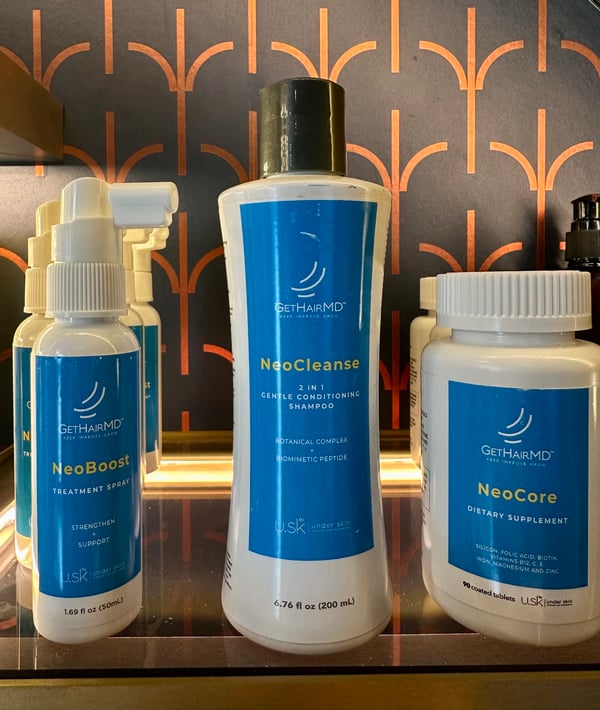
Natural formulas are great, but clinical-grade options like GetHairMD™ medical-grade NeoCleanse shampoo+conditioner deliver stronger results when hair loss is significant. NeoCleanse is formulated with red clover extract, capsicum, quinine bark, and organic silican to name just a few ingredients.
Nutrition and supplements for postpartum hair regrowth
Hair health starts from within. Nutrients to prioritize:
-
Iron
-
Zinc
-
Vitamin D
-
B-complex vitamins
-
Collagen
The GetHairMD NeoCore dietary supplement is a physician-formulated option that supports hair regrowth and structural integrity and is safe for breastfeeding moms. It features a unique blend of bioavailable silicon (as MMST), essential vitamins, and minerals—each chosen to support biological processes involved in maintaining strong, vibrant hair.
Hair care routine tips for new moms
-
Keep routines simple: use a gentle shampoo and let your hair air-dry.
-
Use GetHairMD's NeoBoost to support regrowth between washes. It features a proprietary blend of organic silicon, active botanicals and bimimetic peptides designed to maintain a healthy scalp environment.
-
Don’t stress about washing every day—consistency matters more than frequency.
Postpartum Hair Loss Solutions in Austin, TX
If you’re noticing significant thinning or shedding that lasts beyond the first year, it may be time to get expert help. In Austin, Flycatcher offers advanced, non-surgical hair restoration treatments through the GetHairMD™ program.
Our postpartum-friendly options include:
-
Clinical Hair Growth Laser (Low Level Laser Therapy in our clinic)
-
Dual Wave Energy Cap (LLLT for at-home therapy)
-
Our GetHairMD NeoSystem featuring a daily dietary supplement, topical, and shampoo+conditioner
Each treatment plan is tailored by a provider and monitored for safety—especially important for breastfeeding mothers.
By choosing Flycatcher, you gain access to science-backed solutions with compassionate, local care right here in Austin.
[Additional Reading: Red Light Therapy for Hair Growth (Benefits, Best Options, & Cost)]
Frequently Asked Questions
Is postpartum hair loss permanent?
No. For most women, it's temporary and resolves within 6 to 12 months.
How long does it take for postpartum hair to grow back?
Most women see regrowth starting around 6 months postpartum and recovery by 12 months.
Can breastfeeding cause or worsen postpartum hair loss?
Not directly. But nutritional depletion from breastfeeding can contribute if dietary intake isn’t sufficient.
What’s the best haircut for dealing with thinning postpartum hair?
Consider blunt cuts, bangs, or layers that add volume and reduce weight.
Does postpartum hair loss happen after every pregnancy?
It’s common with each pregnancy, but the severity can vary.
Are there treatments that are safe while breastfeeding?
Yes. Many non-invasive treatments and supplements (like those in the GetHairMD™ suite) are safe under medical supervision.
How much hair loss is too much?
If you’re losing large clumps or seeing scalp patches, it’s best to consult a professional.
Final Thoughts: You're Not Alone — And You Have Options
Hair loss after childbirth is a natural, temporary part of many women’s postpartum journey. Still, it can feel overwhelming. Remember: you’re not alone, and you don’t have to navigate it without support.
Flycatcher is here to help, offering expert, Austin-based solutions powered by GetHairMD™’s proven treatments. When you’re ready to take control of your hair health, schedule a consultation with our team and take the first step toward regrowth and renewed confidence.
Flycatcher is here for you in the Texas Hill Country—serving men and women from Austin, Bee Cave, Lakeway, Spicewood, and beyond. Call or text (737) 239-0112.
