

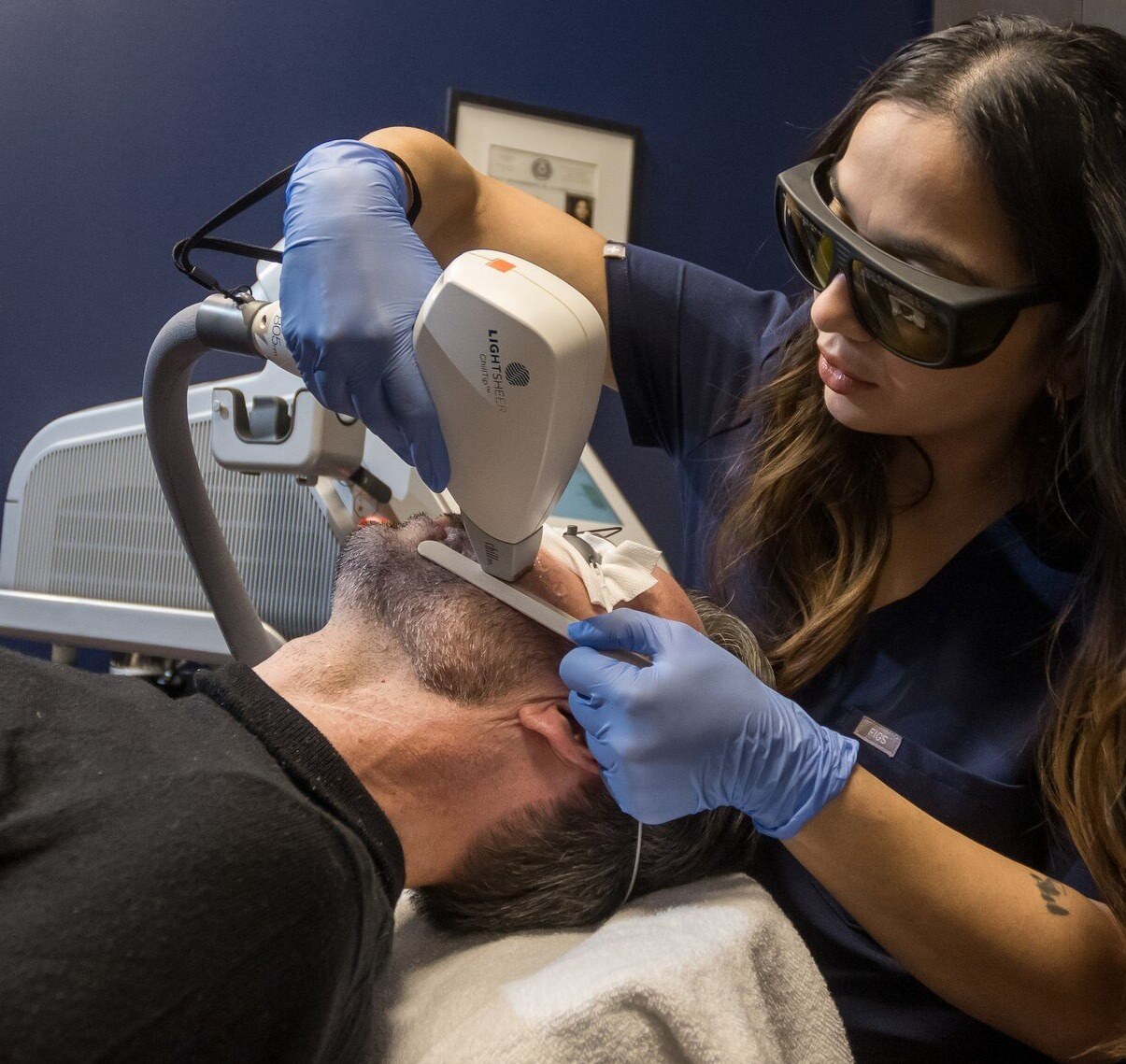
Laser Hair Removal
Mar 6, 2026
Flycatcher Team
On TRT and Growing More Body Hair? What Laser Hair Removal Can Do
You’re not imagining it: some men notice new or thicker body hair after starting testosterone replacement therapy (TRT)—sometimes months into treatment, not right away. Over the past weeks, we’ve had multiple male clients tell us a similar story: they felt good on TRT, and then around the 9-month mark, they started seeing hair where there wasn’t much before. Now they’re at Flycatcher for a solution.
If you’re in the same boat, this guide covers the two questions we hear most:
- Does TRT cause more body hair?
- Can you get laser hair removal while on testosterone—and will it still work?
We’ll keep it practical, set realistic expectations, and explain what laser hair removal can (and can’t) do while you’re on TRT.
Does TRT cause more body hair?
It can. Increased facial and body hair is a commonly described effect of testosterone therapy, and it can show up as hair that grows faster, darker, or thicker in areas that are sensitive to androgens.
TRT doesn’t “create” hair out of nowhere in a single switch-flip moment. Instead, testosterone (and hormones it converts into) can influence hair follicles over time—so it’s normal for changes to feel gradual and to become obvious later.
Published timelines on testosterone therapy commonly place noticeable facial/body hair growth in the 6–12 month range (with continued thickening over years), which lines up with what we’ve been hearing from clients around the 9-month mark.
Why it happens
Hair follicles in different areas of the body respond differently to hormones. Some follicles are more “androgen responsive,” meaning they’re more likely to react to shifts in testosterone signaling. Over time, those follicles may produce hair that’s more noticeable than what you had before.
This also explains why two people can have completely different experiences on TRT: genetics and follicle sensitivity matter a lot.
TRT side effects: body hair growth (and where men notice it most)
When men come in asking about unwanted hair growth while on testosterone therapy, the “surprise” areas tend to be places you’re not trying to highlight in the mirror:
- upper back and shoulders
- neck (especially the back of the neck/collar line)
- upper arms
- chest and stomach
- lower back
- ear and nose hair
Sometimes it’s not just the amount of hair that's the problem—it’s the maintenance: shaving more, irritation, ingrowns, or that “I didn’t used to have to deal with this” feeling.
Can you get laser hair removal on testosterone?
In most cases, yes—you can get laser hair removal on testosterone.
What changes is not whether laser works, but how we plan for results and maintenance if your hormones are actively encouraging hair growth over time.
If you’re on TRT, your laser plan should be built around two realities:
- You can treat the hair that’s present now (and reduce it significantly).
- Your body may continue to “recruit” new hairs into active growth later—meaning more touch-ups than normal can be typical.
[Additional Reading: Laser Hair Removal for Austin Swimmers, Cyclists, & Bodybuilders]
Does testosterone affect laser hair removal results?
Testosterone doesn’t cancel out the laser. Laser hair removal works by targeting pigment in the hair and damaging the follicle to reduce future growth.
But testosterone can affect what happens over time by stimulating hair follicles—so even after you’ve reduced existing hair, you may notice new growth in the future and need maintenance sessions.
A helpful way to think about it:
- Laser is great at reducing the hair you have right now.
- TRT may increase the odds you’ll need occasional maintenance because additional follicles can become active later.
You need to have proper expectations going into a series of laser hair removal treatments while on TRT.
[Men with Darker Skin Tones Using Testosterone Therapy >> Read this about Laser Hair Removal and Skin of Color]
Laser hair removal while on TRT: what to expect (realistically)
Every person is different, but here are the expectations we typically set for men on TRT:
You’ll need a series, not a single session
Hair grows in cycles. Laser is most effective when hair is in the right phase, which is why treatments are spaced out and repeated every six to eight weeks. Read our in-depth guide on laser hair removal to learn more about how many sessions may be needed.
“Reduced” is the goal—often dramatically
Most clients are aiming for:
- less density
- slower growth
- fewer areas to shave
- less irritation/ingrowns
- a cleaner outline (neckline, shoulders, back edges, etc.)
Maintenance can be part of the plan
If TRT is a long-term therapy for you, it’s reasonable to expect occasional touch-ups – whether annually or bi-annually – after completing a full series of treatments.
Ready to stop dealing with unwanted TRT hair growth?
If TRT has you seeing hair in new places—and you’re over shaving, irritation, or constant upkeep—laser hair removal can be a great option. The key is an honest plan: treat what’s here now, and build in maintenance if your body keeps producing new growth.
Flycatcher is located just three miles west of The Galleria in Bee Cave, we proudly serve Spicewood, Bee Cave, Lakeway, and the surrounding areas of Austin and the Texas Hill Country.
Our Laser Hair Removal Professionals will be happy to meet with you one-on-one to assess if you are a good candidate for laser hair removal. Reach us at (737) 239-0112 or book a consultation here. You can review our laser hair removal pricing on this page.
